Published on June 27, 2024
By Admin
Each knee joint has two semilunar shaped cartilage structures in the knee joint called medial and lateral meniscus. Primary function of a meniscus is to act like a shock absorber and distribute the forces towards the periphery of the knee joint. Thus primary function of the meniscal cartilages is to protect the knee from early wear and tear. So meniscus tear should be ideally repaired by using a meniscus tear protocol. See Figure 1.
A meniscus injury can occur in day to day activities like getting up from a sittiing position from a sofa/ chair or floor. But the more common cause of a meniscal injury is in sports like football/ basketball/ volleyball etc. Many a times the meniscus tear is a part of the other injuries in the knee like ACL tear or other ligament tears.
A torn meniscus leads to symtoms of pain/ locking/ catching and feeling of giving way of the knee. If a torn meniscus is inside the knee, it keeps on scratching the joint surfaces of the knee which further leads to reducing the life of the joint. So a torn meniscus should either be repaired or a torn part of meniscus be trimmed to avoid scratching.
The diagnosis of a meniscus tear is by clinical examination and confirmed with MRI. MRI is a highly sensitive investigation which has a potential of overdiagnosis of meniscal tears so a clinical examination should also be perofmed to corroborate the findings of each other.
If a meniscus is a part of a ligament injury, the first priority should always be the treatment of the ligament injury otherwise the meniscus surgery alone will most like retear the meniscus due to an unstable knee caused by untreated ligament injury.
The treatment of meniscus tear is either partial meniscectomy/ trimming or repair of the meniscus. Meniscus repair has gained popularity in the last 8-10 years due to availability of commercial meniscus sutures. The cost of meniscus repair by these commercial sutures is high because each suture usually costs around 25-30 thousand rupees and the number of sutures required for repair depend on the extent of the tear and can range from one suture to even 8-9 sutures thus adding the cost of each suture multiplied by the number of sutures used for repair. Furthermore, each menicus tear is not repairable because the meniscus has blood supply in only its periphery called red part of meniscus, and there is no blood supply in the central part called white part of meniscus. The healing of a meniscus repair will only take place if the tear is present in the red part of the meniscus. The tear in the white part of the meniscus should not be repaired as it is never going to heal.
Another important fact that must be known that in successful ideal case of a repair meniscus in the red zone, the chances of re tear of the meniscus in the next 5 years is around 20-25%. That means in 20-25% cases of a success ful repaired meniscus are likely to need another surgery for meniscus tear in the next 5 years.
Another important fact is that after repair of a meniscus, patient walks with a walker or crutches for around 6 weeks and then gradually will regain is sports activities, while in case of trimming/ partial meniscectomy, patient starts walkiing without any support on the very next day of surgery and can go back to sports activities as soon as his pain permits it which is usually 3- 4 weeks.
The other treatment is partial meniscectomy or trimming or balancing of torn meniscus. In this procedure, the surgeon will partially trim the torn part so that it stops scratching the joint surface. This treatment is offered ideally in those patients whose meniscus in unrepairable due to tear being in white zone. Sometimes, the high end professional players also opt for trimming of the meniscus intentionally to return to the game earlier and to avoid a second surgery in the next 5 years, in case they fall in 20- 25% cases of failed repair. Sometimes in complex tear, the procedure of trimming is combined with repair, where after minor trimming of a complex tear, the remaing part is repaired.
The treatment of partial meniscectomy or trimming is also sometimes offered in those patients who can not afford the cost of commericial sutures. Nowadays, many patients have apprehensions that after trimming of a torn meniscus, there knee will be completely destroyed. This is not the case ever. Although meniscus is an important protective tissue for the health of the knee, it is not that the knee will stop function and will be destroyed in next few years. The medical literature after doing comparative studies between meniscectomy patients and repair patients, have observed that in the long term health of the knee some percentage of meniscectomy patients degenerate the knees a bit faster than the non meniscectomy patients.
So the decision of meniscectomy or repair is a very crucial decision which should be taken in a shared manner after through discussion between the surgeon and the patient knowing well the success rate of the repair and also the needs of the patient.
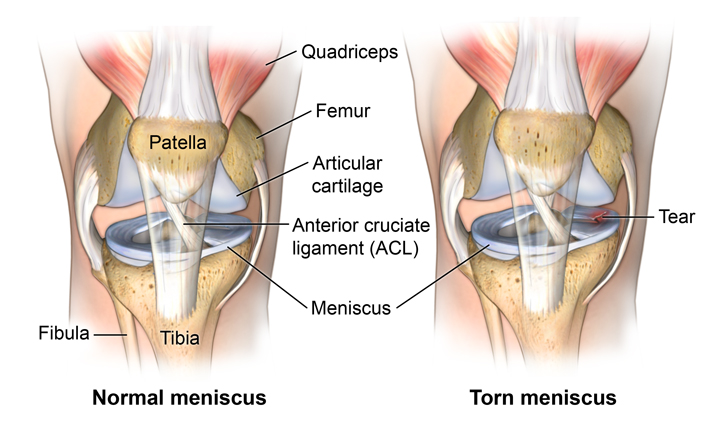
https://www.hopkinsmedicine.org/health/conditions-and-diseases/torn-meniscus
https://my.clevelandclinic.org/health/treatments/21508-meniscus-surgery